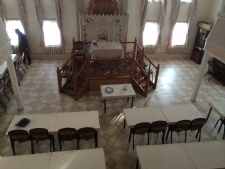
After a person has just had an Aliyah in shul, people say to him “Chazak Uvaruch.” The Ashkenazim say “Yishar Ko’ach”, or, in short, “Shkoyach.” But not in Omsk, Siberia, in the old shul that has been resting on wooden columns for 165 years already. There, they don’t say “Shkoyach” or “Chazak”; there, the person descending from the Bimah (Torah reading platform) shakes hands with all those present, and with the special warmth that is unique to Siberian Jews, they wish each other “Zei Gezunt” (“Be well”).
When the first person, the Cohen, was called to the Torah and wished me “Zei Gezunt”, I thought he just saw I was tired from the long trip. But then, when the Levi and after him another six Yisraels did the same, I understood that it wasn’t aimed at me personally. It wasn’t me; it was them.
In the book “Hayom Yom”, on the date of the 28th of Shvat, the Rebbe brought an explanation of the Ba’al Shem Tov for a verse from this week’s Parasha – “If you see the donkey of someone who hates you crouching under its burden, would you refrain from helping him? You shall help repeatedly with him.” Here is what he said:
The donkey (Chamor), according to the Chassidic teachings, is related to Chomriyut – materialism.
A person’s body is his material part, and since it is material, it objects to the spiritual soul (Neshama) that is inside the person, as the body has wants and desires that don’t exactly coincide with the aspirations of the heavenly Neshama.
The Ba’al Shem Tov explains: If you see your body hating the Neshama and interfering with it, do not think to help your Neshama by breaking the body through self-inflicted suffering and fasting, but, rather, the opposite is true: help it refine and purify itself, so that it will no longer hate the Neshama. Connect your material part to spiritual doing.
Or, put more simply: We must care for the body; our health is important. A healthy person can serve Hashem and observe His Mitzvahs better than a sick person can.
A Jew should be healthy!
I’m not sure that the Jews in Omsk know this saying of the Ba’al Shem Tov. Its seems to me, that as descendants of Jews who were exiled to Siberia, they have become experienced and practical. They know that, as we say in Hebrew, “Ha’ikar Habri’ut” – the main thing is to be healthy.
Shabbat Shalom and Zei Gezunt!
Zalmen Wishedski